Files without a publisher
No studio Aviator APK exists: what circulates and what a casino app is
Spribe supplies Aviator to casino operators rather than to players, so a standalone package carrying the game's name comes from someone else, and a casino's own app is a different thing again.
No legitimate aviator apk is published by the studio for players, because Spribe does not distribute the game that way. Aviator reaches people through casino operators, inside their lobbies, on their sites or in apps those operators build themselves. A package passed around under the game's name alone has a different author, and the name on its icon says nothing about who that author is.
This page explains how the game is really supplied, what the free-floating files tend to be, what Android permits once a file from outside a store is installed, and how a casino's own app differs from all of them.
Why no studio aviator apk exists for players
Spribe's business is supplying games to operators. The operator hosts the round, holds the player's account and balance, handles deposits and withdrawals and sets its own terms. The studio's public site offers a Play Demo button on a play balance and names Spribe OÜ in its footer; it offers players no registration, no wallet and no file of their own. How that same absence of an official file fits into the wider aviator game pakistan picture is laid out on the home page.
That arrangement matters for anyone holding a package that claims to be “Aviator”. A game with no operator behind it has nowhere to keep a real balance. If a file shows a deposit screen, some other party is collecting that money, and that party is not the studio.
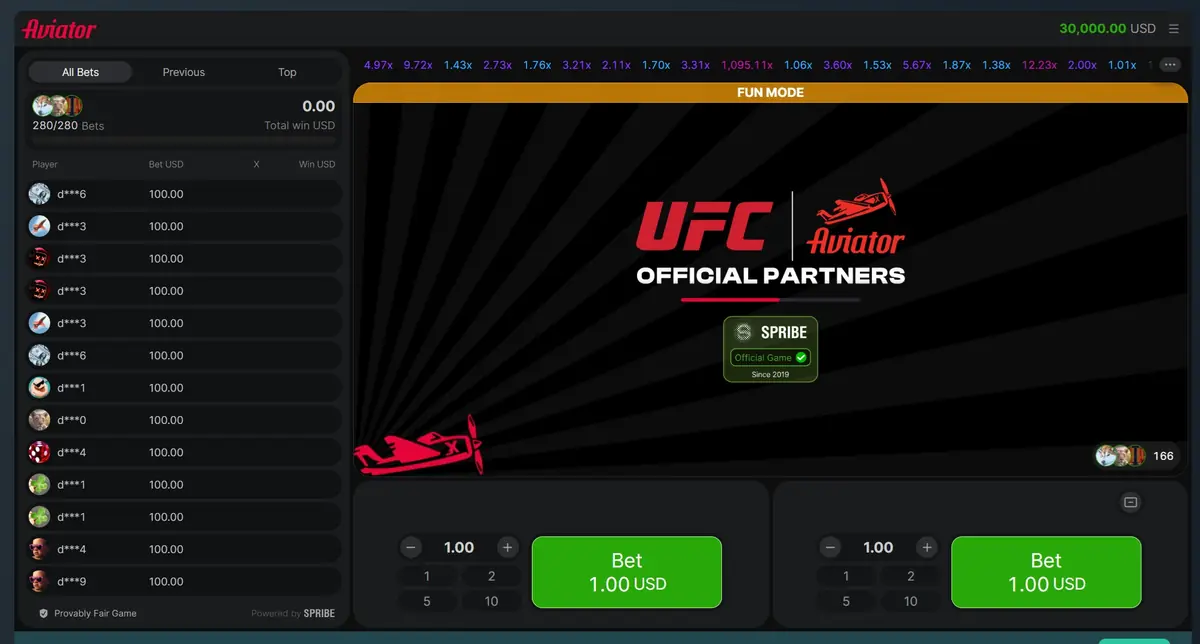 Own capture, fun mode, 7 September 2026, resized and re-encoded and otherwise untouched.
The genuine round looks the same in any lobby: a history strip with blue results below 10×, purple from 10× to under 100× and red at 100× and above, two independent bet panels, quick-stake buttons and a count of players in the round. Seeing that screen inside a file does not make the file genuine, because artwork and layouts are easy to copy.
What circulating files tend to be, and why none is the studio's
Files that use the game's name fall into a few broad groups. None of them is published by Spribe.
- Wrappers. A shell that opens some casino's website inside a frame. The account still lives with that casino, but the wrapper's author can see and alter what passes through it.
- Clones. A separate product with its own balance, its own deposit screen and a crash game styled after Aviator. There is no reason to believe its rounds follow Spribe's fairness construction, and nobody named to ask.
- Fake prediction tools. Packages that promise the next crash point behind a paid unlock, covered in detail on the page about locked guessing files.
- Lures. Files whose real purpose is collecting passwords, text-message codes or wallet access, with the game's artwork as bait.
The groups overlap, and one package can be all four at once. A clone of this kind sold under a country name is examined on the page about a copycat app using the game's name.
What Android permits once unknown sources are on
A phone refuses files from outside its app store until the owner switches on installs from unknown sources. Turning that setting on removes the store's review step for whatever comes next, and it is the first thing sideloaded packages ask for.
Once installed, a file can request broad permissions. In general terms, the risky ones include:
- reading text messages, which is where one-time codes for bank and wallet apps arrive;
- drawing over other apps, which allows a fake sign-in screen to sit on top of a genuine one;
- accessibility services, which let an app read the screen and tap buttons without the owner;
- updating itself from a server outside the store, so a harmless first version can be replaced later.
On a phone that also runs Easypaisa, JazzCash or a crypto wallet, those permissions put money beyond the gaming account within reach. A file without a named publisher offers no one to contact when that happens.
What a casino's own app is
Some operators publish their own apps. Such an app is a front end to that operator's account system, with the same account, balance and terms as the operator's website. The Aviator inside it is Spribe's game supplied to that operator, just as it is on the site.
Before trusting any app that claims to belong to a casino, a few checks help, and none of them requires installing anything:
- The operator's own website should point to the app itself; a link found in a chat message or a comment thread does not count.
- The publisher name shown for the app should match the company named in the operator's terms.
- Signing in should show the same account and balance as the website, not a fresh wallet.
- The operator's terms should print the licence holder and its number, which can be compared with the issuer's register.
An app does not change the arithmetic of the round either. The 97% return means a 3% house edge on turnover wherever the game is opened: Rs 500 a round across 120 rounds turns over Rs 60,000, with an expected cost of Rs 1,800. A phone in a pocket tends to mean more rounds rather than better ones, so a deposit limit and a session limit set inside the account do more work on a small screen than on a large one.
Casinos whose own lobbies showed Aviator on 16 September 2026 are listed with their terms and licence cells on the ranked list of casinos.
Signs an aviator apk is not what it claims
- It asks for payment to unlock features of a game that costs nothing to open in a casino lobby.
- It names no company, address or licence anywhere.
- It takes deposits to personal wallet numbers or asks members to recruit others for rewards.
- It promises multipliers, “boosts” or advance knowledge of rounds, none of which the real game allows.
- It asks for a casino username and password to “connect” an account.
Any one of these is reason enough to delete the file. The wider question of telling the genuine game from imitations is set out on the page about checking copies.
What to do instead
- Try the free play-balance version to see the real round without installing anything.
- Decide on a stake and a session length in advance, and stop when either is reached.
- Gamblers Anonymous holds meetings internationally for anyone who wants support.